

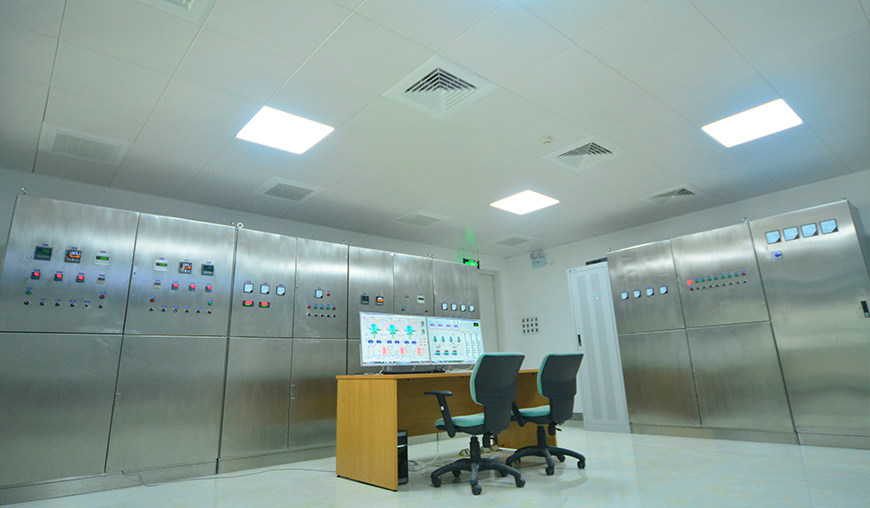
Laboratory and pilot scale freeze dryers play a critical role in research, process development and small‑batch
production across pharmaceutical, biotechnology, food, nutraceutical, materials science and academic sectors.
This in‑depth guide explains how laboratory and pilot scale freeze dryers work, where they are used, why they
are essential for product development and scale‑up, and which technical specifications matter most when
selecting a system.
A laboratory scale freeze dryer, also called a laboratory lyophilizer or lab freeze dryer, is a compact
system designed for research, formulation screening and small experimental batches. It enables scientists to
remove water or solvent from sensitive products by sublimation under vacuum while preserving structure,
biological activity and volatile components.
Laboratory freeze dryers are used to study freeze‑drying behavior, optimize formulations, test stabilizers,
determine critical temperatures and establish preliminary process cycles. They are typically installed in
R&D laboratories, universities, pilot plants and quality control facilities.
| Parameter | Typical Range | Description |
|---|---|---|
| Shelf area | 0.1 – 2.0 m² | Surface where product containers or trays are placed. |
| Condenser capacity | 2 – 30 kg of ice | Maximum amount of ice that can be trapped before defrosting. |
| Condenser temperature | -40 to -80 °C | Low temperature surface that captures sublimated vapors. |
| Ultimate vacuum | 0.001 – 0.05 mbar | Minimum pressure achieved in the drying chamber. |
| Shelf temperature range | -60 to +60 °C | Allows freezing, primary drying and secondary drying. |
| Control system | Manual / basic PLC / touch screen | Depends on model and intended complexity of cycles. |
| Application focus | R&D, lab‑scale process development | Designed for small experimental batches. |
A pilot scale freeze dryer, also known as a pilot lyophilizer or pilot freeze dryer, bridges the gap between
laboratory studies and full‑scale industrial production. It is engineered to mimic commercial freeze dryer
performance while operating at a smaller but industrially relevant scale.
Pilot scale freeze dryers are used to perform scale‑up studies, optimize freeze‑drying cycles, validate
lyophilization processes, generate clinical trial materials and train operators. They are crucial for
translating laboratory formulations into robust, reproducible and regulatory‑compliant industrial processes.
| Parameter | Typical Range | Description |
|---|---|---|
| Shelf area | 1 – 10 m² (sometimes higher) | Replicates loading pattern of industrial freeze dryers. |
| Condenser capacity | 20 – 200 kg of ice | Handles larger product volumes and longer cycles. |
| Condenser temperature | -40 to -90 °C | Low enough to efficiently capture vapors during primary drying. |
| Ultimate vacuum | 0.001 – 0.05 mbar | Comparable to industrial systems for reliable scale‑up. |
| Shelf temperature range | -60 to +80 °C | Broader range for complex drying profiles. |
| Control system | Advanced PLC / SCADA | Recipe management, data logging and integration with plant systems. |
| Regulatory features | GMP design, CIP/SIP, 21 CFR Part 11 support | Enables use in regulated pharmaceutical and biotech environments. |
| Application focus | Scale‑up, clinical supply, process validation | Designed to match industrial conditions. |
Understanding the differences between laboratory and pilot scale freeze dryers is essential when planning a
development strategy. Both types of freeze dryers use the same basic lyophilization principles, but they
serve distinct roles in the product life cycle.
| Aspect | Laboratory Scale Freeze Dryer | Pilot Scale Freeze Dryer |
|---|---|---|
| Main purpose | Research, formulation screening, feasibility studies | Scale‑up, process optimization, clinical and small commercial batches |
| Typical batch size | Milliliters to several liters, grams to kilograms | Tens to hundreds of liters, kilograms to hundreds of kilograms |
| Shelf area | 0.1 – 2 m² | 1 – 10+ m² |
| Flexibility | High; rapid changeover and frequent experimental changes | Moderate; focuses on reproducibility and similarity to production conditions |
| Regulatory environment | Mainly non‑GMP R&D laboratories | Often GMP‑compliant, especially in pharma and biotech |
| Control sophistication | Basic to intermediate | Advanced with detailed data acquisition and batch reporting |
| Typical industries | Academia, early‑stage biotech, research centers | Pharmaceutical, biotech, food and nutraceutical manufacturers |
| Cost and complexity | Lower purchase cost, simpler utilities | Higher investment, more demanding utility and installation requirements |
Both laboratory and pilot scale freeze dryers rely on the same fundamental freeze‑drying (lyophilization)
principle. The process involves freezing the product, reducing the pressure and supplying heat in a controlled
manner so that ice sublimates directly from solid to vapor without passing through the liquid phase.
Freezing:
The product is cooled below its freezing point to form ice crystals. In laboratory and pilot scale
freeze dryers, this can be done either in‑situ on the shelves or externally in a freezer before
loading. The freezing step determines ice crystal size, which affects drying rate and final cake
structure.
Primary drying (sublimation):
After freezing, the chamber pressure is reduced using a vacuum pump. Heat is supplied through the
shelves. Ice transitions directly from solid to vapor and is captured by the condenser. Shelf
temperature and chamber pressure must be controlled below the product’s critical temperature to avoid
melting or collapse.
Secondary drying (desorption):
Once the bulk of the ice has sublimated, temperature is gradually increased while maintaining low
pressure to remove residual bound moisture. This step reduces final moisture content and improves
product stability during storage.
Sublimation pressure: Depends on ice temperature; lower temperatures require lower
pressures for effective sublimation.
Triple point: Freeze drying must generally operate below the triple point pressure of
water to avoid liquid phase formation.
Critical product temperature (collapse temperature or glass transition temperature):
Defines the maximum allowable product temperature during primary drying.
Laboratory scale freeze dryers are used in a wide variety of applications that require precise control of
drying conditions at small scale. Their flexibility and ease of use make them ideal for experimental work and
early‑stage development.
Determination of critical temperatures, drying endpoints and residual moisture targets for new
formulations.
Pilot scale freeze dryers are central to translating laboratory discoveries into scalable, reliable and
regulatory‑compliant freeze‑drying processes. They provide a platform for process characterization and
process optimization under conditions similar to industrial production.
Implementation of process analytical technology (PAT) tools such as tunable diode laser absorption
spectroscopy and product temperature probes.
Both laboratory and pilot scale freeze dryers offer specific advantages for product development and
industrialization. Choosing the right scale at the right time reduces development risks and improves process
efficiency.
Selecting an appropriate laboratory or pilot scale freeze dryer requires careful evaluation of key technical
specifications. The table below summarizes representative specification ranges to support initial sizing and
comparison.
| Specification | Laboratory Scale Range | Pilot Scale Range |
|---|---|---|
| Shelf area | 0.1 – 2.0 m² | 1 – 10+ m² |
| Number of shelves | 1 – 5 | 4 – 15 |
| Shelf temperature range | -60 to +60 °C | -60 to +80 °C |
| Shelf temperature uniformity | ±1.0 – 2.0 °C | ±0.5 – 1.5 °C |
| Condenser capacity | 2 – 30 kg of ice | 20 – 200 kg of ice |
| Condenser temperature | -40 to -80 °C | -40 to -90 °C |
| Ultimate chamber pressure | 0.001 – 0.05 mbar | 0.001 – 0.05 mbar |
| Control system | Basic PLC or microprocessor | PLC/SCADA with advanced recipe management |
| Data logging | Optional or basic | Comprehensive, often 21 CFR Part 11 ready |
| Loading types | Flasks, vials, trays, bulk containers | Vials (stoppered or open), trays, bulk loads |
| CIP/SIP | Usually not included | Common in GMP‑oriented systems |
Achieving consistent freeze‑drying results in laboratory and pilot scale freeze dryers depends on accurate
control and monitoring of critical process parameters. Modern freeze dryers provide programmable recipes and
real‑time data to support process development and optimization.
Laboratory and pilot freeze dryers can be equipped with various sensors and analytical tools, such as:
In laboratory freeze dryers, scientists often explore a wide range of cycle conditions to identify the
design space within which safe and efficient lyophilization occurs. Once a feasible laboratory cycle is
established, it is transferred to a pilot scale freeze dryer for refinement. Adjustments are then made to
accommodate differences in heat transfer, chamber dynamics and load configuration.
Both laboratory and pilot scale freeze dryers support multiple container formats and product presentations.
The choice of loading method strongly influences heat and mass transfer characteristics, and therefore the
design of the freeze‑drying cycle.
Vials are the most common container format for pharmaceutical and biotech products. Laboratory and pilot
freeze dryers are designed to handle a defined number of vials per shelf, organized in specific patterns.
Stoppering mechanisms can be included for vials intended for injection or aseptic handling.
Trays are widely used for food, nutraceutical and bulk pharmaceutical ingredients. Laboratory freeze dryers
often use small stainless steel or plastic trays, while pilot systems use larger trays that reflect actual
production dimensions. Bulk containers may include bottles, pans or special holders for powders and pastes.
Many laboratory freeze dryers offer manifold ports for attaching round‑bottom flasks, ampoules or small
containers. This configuration is highly flexible for research and small‑scale applications but is generally
not used for pilot scale or GMP manufacturing due to limited process control and documentation.
Temperature and pressure capabilities are central to the performance of laboratory and pilot freeze dryers.
The ranges available define what types of products can be processed and how aggressively cycles can be
shortened without compromising product quality.
| Parameter | Laboratory Freeze Dryer | Pilot Scale Freeze Dryer |
|---|---|---|
| Freezing shelf temperature | -40 to -60 °C | -40 to -60 °C |
| Primary drying shelf temperature | -40 to +10 °C | -40 to +30 °C |
| Secondary drying shelf temperature | 0 to +60 °C | 0 to +80 °C |
| Primary drying chamber pressure | 0.05 – 0.5 mbar | 0.02 – 0.3 mbar |
| Secondary drying chamber pressure | 0.001 – 0.1 mbar | 0.001 – 0.05 mbar |
Selecting a suitable freeze dryer requires evaluating not only capacity and performance specifications but
also design attributes that affect integration, operability and long‑term reliability.
While laboratory and pilot scale freeze dryers offer powerful capabilities, users may encounter several
practical challenges during development and scale‑up.
Cycle transfer between scales: Differences in heat transfer, shelf loading and chamber
geometry can alter drying behavior when moving from laboratory to pilot scale freeze dryers.
Product collapse or meltback: If product temperature exceeds critical thresholds during
primary drying, structural damage and quality loss may occur.
Long cycle times: Conservative conditions often lead to extended drying times, increasing
energy consumption and development timelines.
Instrumentation limitations: Inadequate temperature or pressure measurement can make it
difficult to optimize cycles or diagnose process deviations.
Load‑dependent performance: Changes in filling volume, vial arrangement or product
formulation may require cycle re‑optimization.
Freeze drying is energy‑intensive due to refrigeration and vacuum requirements. In both laboratory and pilot
scale freeze dryers, attention to energy efficiency helps reduce operating costs and environmental impact.
Proper safety practices and preventive maintenance are essential to ensure reliable operation of laboratory
and pilot scale freeze dryers.
Many organizations use both laboratory and pilot scale freeze dryers as part of a staged development
approach. For those starting from scratch, the choice of the first system depends on specific goals,
resources and project pipeline.
Technological advances are improving how laboratory and pilot scale freeze dryers support development and
manufacturing.
Laboratory and pilot scale freeze dryers are indispensable tools for designing, optimizing and scaling
lyophilization processes. Laboratory freeze dryers provide the flexibility needed for fundamental research,
formulation screening and early‑stage development. Pilot scale freeze dryers then bridge the gap to full
industrial production by recreating realistic operating conditions and supporting process validation.
Understanding the principles, specifications and applications of these systems helps organizations select the
right equipment, design robust processes and bring stable, high‑quality freeze‑dried products to market across
pharmaceutical, biotech, food, nutraceutical and advanced materials industries.
```
يستخدم هذا الموقع ملفات تعريف الارتباط لضمان حصولك على أفضل تجربة على موقعنا.
 English
 Español
 Pусский
 Français



 واتس اب
 هاتف
هاتف
تعليق
(0)